
Robinson honored for helping disadvantaged high-school students

, professor of cell biology at the Johns Hopkins University School of Medicine, won the for developing the Summer Academic Research Experience program. The SARE program helps disadvantaged teenagers in inner-city Baltimore get experience in biomedical research as well as academic tutoring. The 精品国产一区二区桃色’s Minority Affairs Committee selects the winners of this award.
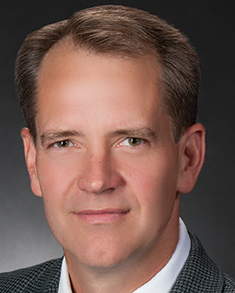
– Douglas N. Robinson
Named after Ruth L. Kirschstein of the National Institutes of Health, the award honors outstanding scientists who are committed to helping underrepresented minorities enter the scientific enterprise and thrive within it. Kirschstein was renowned for science and public service. After working on the polio vaccine, Kirschstein became the first woman to direct an NIH institute, the National Institute of General Medical Sciences. Later, she served as deputy director and acting director of the NIH. Kirschstein was an advocate for training, particularly for underrepresented minorities.
Robinson studies how different cells take on their distinctive shapes. By understanding the fundamental principles that underlie cell morphology, Robinson’s team aims to parse out how cell shape influences diseases such as pancreatic cancer, chronic obstructive pulmonary disease and degenerative motor neuron diseases.
But Robinson and his team also work to bring people into the laboratory who otherwise wouldn’t have the privilege of doing research. About 34 percent of children in Baltimore grow up in poverty, which is almost three times higher than the national average. Robinson developed SARE nine years ago as a way for promising but disadvantaged students to get trained in academic and professional skills as well as to build a network of mentors.
Robinson got the inspiration for SARE when he and his wife, Lisa Naeger, began taking Sunday dinners to the Boys Hope house. The house, and the subsequent Girls Hope house, are supported by the Boys Hope Girls Hope organization, which provides at-risk children with homes, education, and financial and emotional support. At the dinners, Robinson and Naeger heard the teenagers express interest in research. After bringing two teenagers into his laboratory, Robinson’s group decided to formalize the opportunity in the form of SARE.
Of the 37 scholars who have come through SARE to date, 23 have reached college age and matriculated into four-year colleges with partial or full scholarships. Half of the students have chosen science, engineering, math or health-related majors.
, the director of the department of cell biology at Hopkins, explained in his nomination letter that Robinson won a Health Career Opportunity Program grant through the Health Resources and Services Administration to expand the scope of SARE to the greater Baltimore area as well as the rest of the country. In the expanded format, the program also now serves disadvantaged undergraduates and postbaccalaureate students.
In his letter supporting Robinson’s nomination, at the University of Wisconsin–Madison wrote, “Doug Robinson is one of an incredibly rare group: full-time researchers who nevertheless make major education contributions well beyond the expectations that come with a faculty position.” Bement closed his letter by saying that Robinson was “an ideal candidate” for the award.
Enjoy reading ASBMB Today?
Become a member to receive the print edition four times a year and the digital edition monthly.
Learn moreGet the latest from ASBMB Today
Enter your email address, and we鈥檒l send you a weekly email with recent articles, interviews and more.
Latest in People
People highlights or most popular articles

In memoriam: Michael J. Chamberlin
He discovered RNA polymerase and was an ASBMB member for nearly 60 years.

Building the blueprint to block HIV
Wesley Sundquist will present his work on the HIV capsid and revolutionary drug, Lenacapavir, at the ASBMB Annual Meeting, March 7鈥�10, in Maryland.

In memoriam: Alan G. Goodridge
He made pioneering discoveries on lipid metabolism and was an ASBMB member since 1971.

Alrubaye wins research and teaching awards
He was honored at the NACTA 2025 conference for the Educator Award and at the U of A State and National Awards reception for the Faculty Gold Medal.

Designing life鈥檚 building blocks with AI
Tanja Kortemme, a professor at the University of California, San Francisco, will discuss her research using computational biology to engineer proteins at the 2026 ASBMB Annual Meeting.

Jordahl named Gilliam Fellow
He will receive three years of funding to support his thesis research.